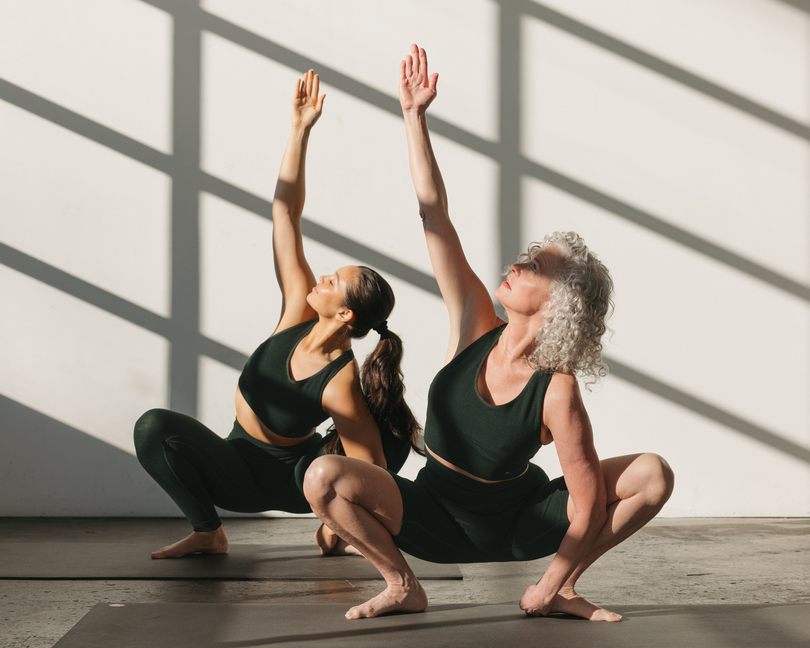

Your pelvic floor is a lot like the foundation of a house. It's easy to forget it's there until something goes wrong. Then, all of a sudden, it’s impossible to ignore. “There’s a lack of education about this part of our bodies,” says pelvic floor therapist Anietie Ukpe-Wallace, PT, DPT, and founder of Self-Care Physio. “It’s also hidden, so you generally don’t think about it unless things go awry.”
Unfortunately, pelvic floor issues are all too common. Symptoms like urinary leakage, pelvic discomfort, constipation, and pain during sex can occur at any age. The older we get, the more common they become—and they can be accelerated by life events like hysterectomy or any abdominal surgery, pregnancy, birth, breastfeeding, puberty, and menopause. In fact, a 2022 study published in Nature found that about one-third of women in the United States currently live with at least one pelvic floor disorder. What’s more, 20 percent of women will undergo surgery for pelvic organ prolapse or urinary incontinence during their lifetime.
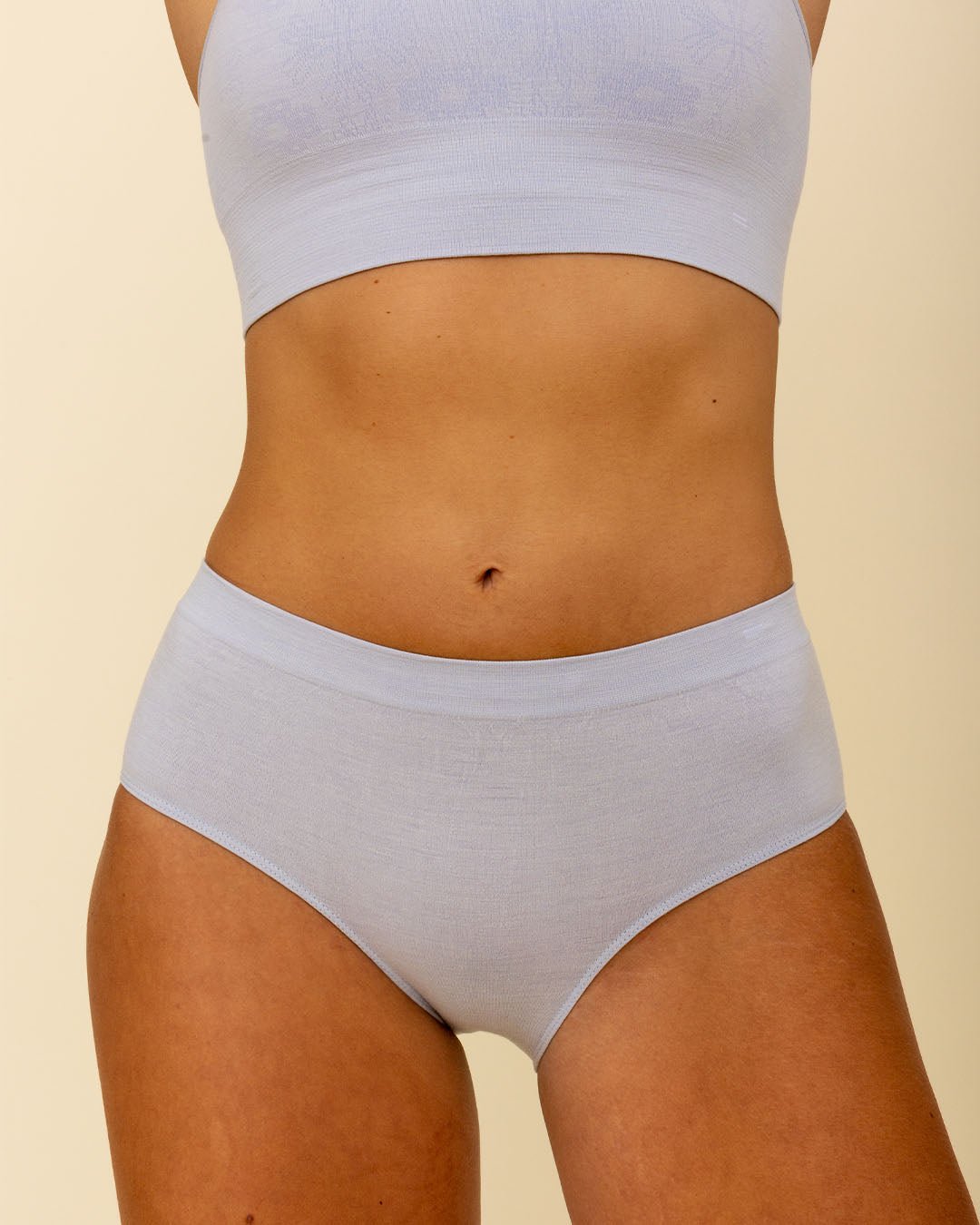
The good news is that like any muscle group, there’s a lot you can do to help prevent issues before they start, or to correct them before they snowball. Movement, recovery, and even what you wear closest to your body (that’s why we created naturally sustainable seamless Merino wool underwear) can all play a role in keeping your vulvar area comfortable through every stage of life. To separate fact from fiction and learn what really keeps your pelvic floor healthy, we talked to four pelvic floor therapists who specialize in treating active women. Here’s what they say about the keys to maintaining a healthy pelvic floor at any age.

What is your pelvic floor anyway?
Think of the pelvic floor as a hammock of muscles that stretches from the pubic bone to the tailbone. “It’s actually three layers of muscles, so they play a really big role in providing optimal support and stability to the lower half of our body,” says Dr. Ukpe-Wallace. Joselyn Rodriguez, PT, DPT, founder of Jae Physical Therapy in Davie, Florida, adds, “This group of muscles also has fascia, your ligaments, and nerves that go through the pelvic floor as well.”
The pelvic floor can also be understood by what it does. As attachment points of your hips, spine, and deep core, the pelvic floor has four central functions, according to Nicole Catrambone Schaffer, PT, DPT, cert MDT, cofounder of Uplift Pelvic Floor Physical Therapy:
-
Sexual function: “Most people don’t realize that in order to have a full orgasm, we have to be able to both relax and contract the pelvic floor.”
-
Bowel and bladder function: “It acts as a sphincter to help control the bowel and bladder.”
-
Breathing: “Our diaphragm and pelvic floor are deeply connected, and it acts as a pressure system that helps us breathe.”
-
Core stability: “As the attachment points of our hips and spine, it helps contribute to stability.”
How to find your pelvic floor
Since this area is hidden, it’s worth taking some time to familiarize yourself with the muscles that are working hard to keep your body running smoothly. Becoming more aware of your pelvic floor—and your body as a whole—can help you recognize what's normal for you and notice when something changes.
Start by sitting on a chair with your feet flat on the floor. As you inhale, notice how your sit bones gently widen, and your pelvic floor softens and descends. As you exhale, you should feel those muscles naturally lift back up. Simply paying attention to this movement is a great first step.
If you're still having trouble identifying the muscles, imagine you’re trying to stop yourself from passing gas and pause the flow of urine (just don't make a habit of practicing while you're actually peeing, as this can lead to urinary issues). That subtle lift is your pelvic floor engaging.
Dr. Ukpe-Wallace also encourages women to become more comfortable with this part of their body outside of hygiene or sex. "A big piece of pelvic health is touching yourself on a regular basis," she says. "There's a level of disconnection if you only touch yourself while cleaning or in a sexual context." Exploring with curiosity can help you better understand your anatomy and notice changes that may be worth discussing with a healthcare provider or pelvic floor physical therapist.

How do life events affect the pelvic floor?
Pelvic floor dysfunction has many causes, and symptoms don't always appear after a major life event. They often develop gradually over time, especially as the muscles naturally lose strength with age. That's why paying attention to your pelvic floor throughout your lifetime is so important.
Still, milestones can place significant demands on the pelvic floor and create immediate changes. Pregnancy and birth are two of the most common disruptors. “Whichever way a baby comes out, cesarean or vaginal, your pelvic floor is going to be affected. Also, as you get bigger during pregnancy, you just lose the function of some muscles just anatomically,” says Rachel Rosvold, PT, DPT, cofounder of Uplift Pelvic Floor Physical Therapy.
Hysterectomy and abdominal surgeries will have an impact as well. “You can see a bunch of changes with any abdominal surgery. Depending on what kind of hysterectomy and where the cuff [the closure the surgeon makes at the top of the vagina ]is, that can affect your pelvic floor function. Which ligaments or tendons were cut and the underlying reason for the surgery will have an influence.”
Many women don’t realize that hormonal shifts, even when they are not accompanied by physical changes, can have a serious effect on the pelvic floor, as well. In perimenopause and menopause, for example, there’s a decrease in estrogen. “That decrease is going to have an impact on the elasticity of the vulva, pelvic floor muscles, and the vaginal canal. That can show up as pain with intercourse or a lot of dryness or irritation in that area or even prolapse,” says Dr. Ukpe-Wallace. Similar estrogen decreases can occur during lactation or following a radical hysterectomy as well.

Is your pelvic floor healthy?
A healthy, well-functioning pelvic floor is one that works in the background to help you live a comfortable life. “The pelvic floor is supposed to be a group of muscles that are anticipatory. They turn on and off as the day goes on, but they don't normally need your full undivided attention," says Dr. Rosvold.
A good way to gauge your pelvic floor health is to ask yourself a few simple questions. Can you cough, sneeze, exercise, hike, or run without leaking urine? Can you go for 2 to 4 hours between pees while awake? Are you having one bowel movement per day? Can you fully empty your bladder and bowels? Is sex (penetration if that’s part of your sex life and orgasm) comfortable? Can you insert a tampon or have a gynecological exam without pain? Are unexplained hip, tailbone, or low back pain interfering with your life?
If you answered "no" to any of these questions, it's worth talking to a pelvic floor physical therapist. Leaking, pelvic pressure, constipation, pain with sex, persistent pelvic or hip pain, or a feeling of heaviness (a common sign of prolapse) are all common signals of pelvic floor dysfunction. “I think a lot of people think that [pelvic floor issues] are a price you pay for having a kid, going through surgery, or just aging, and they just brush it off,” says Dr. Rodriguez. “I want people to know that they’re not.”
In many cases, these issues can be significantly improved with the right treatment and exercises.
Editor's Note: Your underwear can have an impact too. Your pelvic floor deserves an environment that stays cool, dry, and comfortable. Breathable seamless Merino wool underwear naturally helps manage moisture and temperature, while keeping you safe from harmful forever chemicals and microplastics. That’s why many gynecologists recommend this natural fiber.

How to build a resilient pelvic floor as we age
Pelvic floor physical therapists agree: when it comes to the best exercises for a healthy pelvic floor, there’s no one-size-fits-all. If you are experiencing issues, make an appointment with a physical therapist who will perform an external and internal assessment. Tightness can look a lot like weakness (both can cause incontinence), but they should be treated in very different ways. “You can take guesses, but without that internal assessment, you don't really know exactly what's going on,” says Dr. Rodriguez.
While every treatment plan is personalized, these are a few movements that can benefit many women:
-
360 breathing: “When we're not breathing properly, then the pelvic floor isn't working properly, and that can lead to a number of issues,” says Dr. Catrambone Schaffer. Sit or lie comfortably and take a slow breath in through your nose, allowing your ribs to expand in every direction as your pelvic floor gently relaxes and descends. Exhale slowly through your mouth, feeling your ribs soften as your pelvic floor naturally lifts. Repeat for 5 to 10 breaths. As you get comfortable with the sensation, start to practice 360 breathing throughout the day as you move.
-
Regular movement: Long periods of sitting can leave the muscles around your hips and pelvis feeling tight and less responsive. Aim to get up at least once every hour to walk around, stretch, or change positions. Even a few minutes of movement throughout the day can make a difference.
-
Kegel exercises: Kegels can help strengthen pelvic floor muscles. To perform one, gently contract the muscles you would use to stop passing urine, hold for a few seconds, then fully relax before repeating. If you experience pelvic pain, pressure, or suspect your pelvic floor is tight, check with a pelvic floor physical therapist before adding Kegels to your routine.
-
Core work: Your pelvic floor works together with your diaphragm, abdominal muscles, and back muscles to stabilize your body. Try these beginner-friendly exercises:
-
Bird dogs: Start on your hands and knees, then slowly extend one arm and the opposite leg while keeping your hips level before returning to center.
-
Clamshells: Lie on your side with your knees bent and feet together, then lift your top knee while keeping your feet touching before lowering with control.
-
Planks: Start on your forearms (or hands) with your legs extended behind you. Form a straight line from your shoulders to your heels by engaging your core and glutes, avoiding sagging or lifting your hips. Hold while breathing steadily.
-
Side planks: Lie on one side and prop yourself up on your forearm with your elbow directly beneath your shoulder. Stack your legs (or bend your bottom knee for an easier variation), then lift your hips until your body forms a straight line from your head to your feet or knees. Hold while breathing normally, then repeat on the other side.
-
-
Weight training:Strength training benefits your entire body, including your pelvic floor. Dr. Rodriguez notes that studies have found that three functional exercises in particular have been shown to strengthen the pelvic floor even more effectively than Kegels. Focus on maintaining steady breathing and good alignment rather than lifting heavy weights, and consider working with a personal trainer or pelvic floor physical therapist to dial in your form.
-
Squats: Stand with your feet about shoulder-width apart. Keeping your chest lifted and core engaged, bend your knees and push your hips back as though you're sitting into a chair. Lower until your thighs are parallel to the floor, or as far as is comfortable, then press through your heels to return to standing.
-
Hip bridge: Lie on your back with your knees bent, feet flat on the floor about hip-width apart, and arms resting at your sides. Exhale as you press through your heels and lift your hips until your shoulders, hips, and knees form a straight line. Pause briefly at the top, then slowly lower back down with control.
-
Lunges: Stand tall with your feet hip-width apart. Step one foot forward and lower your body until both knees are bent to about 90 degrees, keeping your front knee stacked over your ankle and your torso upright. Push through your front heel to return to standing, then repeat on the opposite side.
-

-
Gentle stretching: Tight muscles around your hips and pelvis can affect how your pelvic floor functions. Stretching your hip flexors, glutes, hamstrings, and inner thighs can help maintain resiliency. Hold each stretch for 20 to 30 seconds, breathing slowly and deeply as you relax into the position. You should feel a gentle pull, never pain or bouncing.
-
Figure Four Stretch: Lie on your back with your knees bent. Cross one ankle over the opposite thigh to form a "4," then gently pull your supporting leg toward your chest until you feel a stretch in your glute and outer hip. Repeat on the other side.
-
Child's Pose: Kneel on the floor and sit your hips back toward your heels. Reach your arms out in front of you and rest your forehead on the floor or a pillow. Take slow, deep breaths, allowing your belly and pelvic floor to soften with each inhale.
-
Hip Flexor Stretch: Kneel with one knee on the floor and the opposite foot planted in front of you. Keeping your torso upright, gently shift your weight forward until you feel a stretch across the front of your hip on the kneeling side. Repeat on the opposite side.
-
-
Lymphatic massage: Using light, feather-like pressure (the lymphatic system sits just beneath the skin), gently stroke your skin toward your groin and abdomen, where many of your lymph nodes are located. Stroke gently along your inner thigh toward your groin as if you were petting a cat. A few minutes several times a week can help encourage healthy fluid movement and temporarily reduce swelling.
Common misconceptions about the pelvic floor
While the awareness of pelvic floor health is increasing, there’s still a long way to go. “One common misconception is that if you've never been pregnant or had a child, that you don't need pelvic floor physical therapy. That's not true,” says Dr. Rodriguez. “I've seen women in their 70s, 80s who have pelvic organ prolapse where something like constipation was the cause.” She advocates for getting the care you need. Dr. Catrambone Schaffer echoes this sentiment: “Leakage of any kind is not normal, and sex should never be painful. These are the big things I wish everyone knew.”
We want to know.... Did anything in this article surprise you? Whether you've dealt with leakage on the trail, found relief through pelvic floor therapy, or are just starting to learn about this often-overlooked part of your body, we'd love to hear your story. Please email us anytime at info@branwyn.com or on Instagram @branwynofficial.
A Note From Us: We love exploring the science behind movement, wellness, and the natural world, but every body is different. The information in this article is intended for educational purposes only and is not a substitute for personalized medical advice, diagnosis, or treatment. If you have questions about your health or are experiencing pain or other concerning symptoms, we encourage you to connect with a qualified healthcare professional before making changes to your routine.